Few unsolved cases in American history have captivated the public imagination quite like the Zodiac Killer. Between 1968 and 1969, the Zodiac committed a series of brutal attacks across Northern California, taunting police and journalists with ciphers, threats, and letters signed with his now-infamous crosshair symbol.
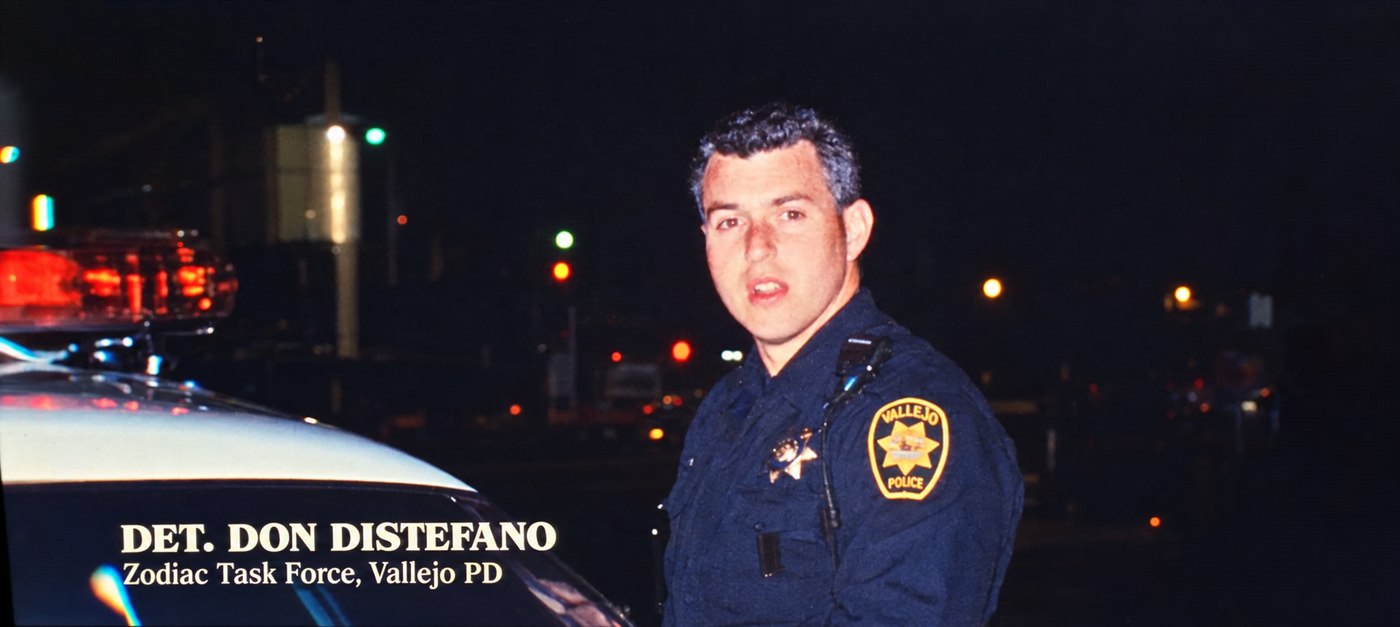
Though decades have passed, the case remains open, and today modern forensic science offers investigative tools that were unimaginable when the Zodiac first struck. As someone who later worked directly on the Zodiac case for the Vallejo Police Department and continues to follow its scientific progress, I prepared this forensic briefing to explore both the original investigation and what today’s technology could mean for one of America’s greatest mysteries.
The Crimes: A Timeline of Terror
Lake Herman Road, Benicia, CA — December 20, 1968. Teenagers Betty Lou Jensen and David Faraday were found shot and killed outside their car parked on a remote lover’s lane turnout. Evidence included .22 caliber shell casings, tire impressions, and footprints, but no witnesses and no apparent motive.
Blue Rock Springs Park, Vallejo, CA — July 4, 1969. Darlene Ferrin and Michael Mageau were shot inside their parked car with a 9mm handgun. Minutes later, the Zodiac called police from a nearby payphone to claim responsibility for this shooting and the one on Lake Herman Road six months earlier.
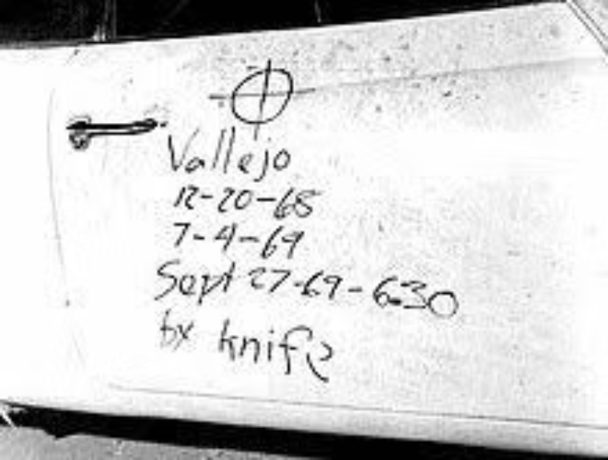
Lake Berryessa, Napa County, CA — September 27, 1969. In the most unusual and ritualistic of his attacks, the Zodiac approached Cecelia Shepard and Bryan Hartnell wearing his now-infamous black hood emblazoned with the cross-circle symbol, bound them with pre-cut clothesline, and stabbed them multiple times. Cecelia later died from her injuries; Bryan survived. The Zodiac left Wing Walker boot prints at the scene and marked Hartnell’s car door with a handwritten account of his crimes.
San Francisco — October 11, 1969. Cab driver Paul Stine was murdered in the Presidio Heights neighborhood. Teen witnesses provided the composite sketch that remains the most iconic image of the Zodiac today. Partial prints were recovered from the vehicle, and a bloody portion of Stine’s shirt was later mailed to the San Francisco Chronicle.
The Letters: The Killer’s Own Voice
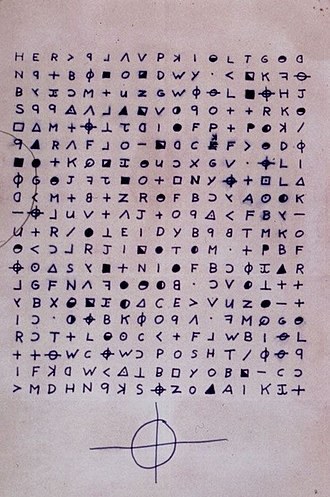
The Zodiac’s 13 authenticated letters shaped the case more than any physical evidence, including ciphers and coded messages, crime scene details never made public, threats to schoolchildren, two pieces of Paul Stine’s shirt, and a final acknowledged letter in 1974 referencing The Exorcist. These communications remain key forensic artifacts today, especially for potential DNA recovery.
Forensic Science Then: Valuable, But Limited
From 1968 to 1974, investigators relied on techniques that were groundbreaking at the time but primitive by today’s standards:
- Fingerprints: Latent prints were lifted from letters and Stine’s cab; none matched suspects. Palm prints found on one letter remain an important piece of evidence.
- Handwriting Analysis: Experts compared letters to samples from suspects like Arthur Leigh Allen. Results were inconclusive and subjective.
- Ballistics: Casings and bullets were analyzed, but no murder weapon was ever recovered.
- Trace Evidence: Hair and fibers were collected, though the technology to fully analyze them did not yet exist.
- Eyewitness Accounts: Descriptions were helpful but inconsistent.
Despite these efforts, no suspect was ever charged.
Modern Forensic Science: A New Path Forward
DNA Analysis & Forensic Genetic Genealogy
This is the same technique used to identify the Golden State Killer. If sufficient saliva or other biological material remains on Zodiac’s letters, envelopes, or stamps, labs may be able to extract degraded DNA, build a SNP-based genetic profile, upload it to public genealogy databases, identify relatives, and construct family trees to help narrow the field of possible suspects. The amount of usable DNA needed varies case by case, and older or degraded samples are not always sufficient to produce a workable profile.

Advanced Fingerprint & Palm Print Technology
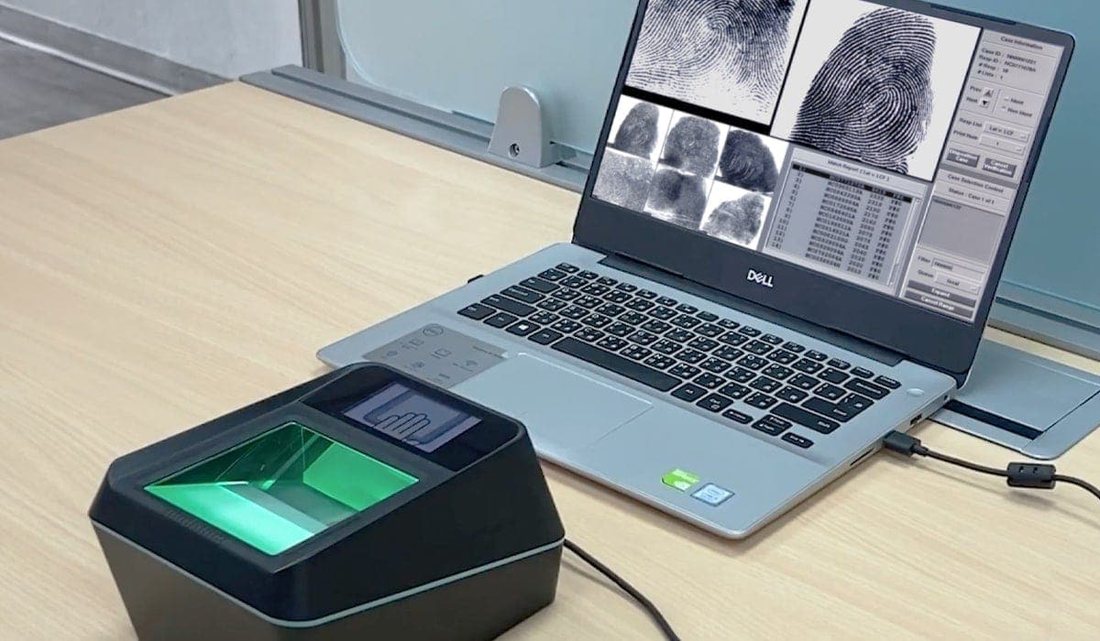
Automated Fingerprint Identification System (AFIS) and modern enhancement tools can analyze partial or distorted latent prints, compare palm prints against massive federal databases, and use AI to detect minutiae not visible in 1969.
AI-Assisted Handwriting Analysis
Artificial intelligence can evaluate handwriting characteristics systematically and at a scale impractical for manual review, offering an additional investigative tool for examining Zodiac authorship. Like traditional handwriting analysis, its findings are probabilistic rather than definitive and work best alongside other evidence.
3D Ballistics & NIBIN Matching
High-resolution 3D imaging can re-examine bullet striations, and the National Integrated Ballistic Information Network (NIBIN) can identify whether the same firearm was used in unsolved crimes across the country.
Digital Document and Ink Analysis
Spectroscopy can determine ink composition, paper source, and typewriter or printer anomalies — techniques that could reveal where the Zodiac acquired his materials.
Trace Evidence Re-Analysis
Hair and fibers from victims, vehicles, or letters could now undergo mitochondrial DNA testing, FTIR spectroscopy, and laser microscopy. Even microscopic pollen trapped in paper fibers can identify geographic origin.
DNA Phenotyping
By determining how genetic information translates into physical appearance, investigators can generate a predicted physical profile — general skin, eye, and hair color, broad facial structure, and ancestry estimates — that may help generate new investigative leads or be weighed against known suspects like Arthur Leigh Allen. These are probabilistic estimates, not exact likenesses, and are best treated as one additional investigative data point rather than a definitive identification.
Geographic & Behavioral Profiling with AI
Algorithms could analyze attack locations, payphone usage, travel patterns, and letter drop points to generate a likely home or work radius — a technique that can help strengthen or weaken the case for a particular suspect, though it cannot by itself confirm or rule someone out with certainty.
Recent Developments
- 2002 DNA testing from a Zodiac letter did not match Allen, though the sample was limited.
- 2023–2024 media and independent investigations revived interest.
- A knife turned over in 2024 showed male DNA mixtures now under review.
- Netflix’s This Is the Zodiac Speaking (2024) highlighted new forensic opportunities and ongoing law enforcement collaboration.
The case remains very much alive.
What Needs to Happen Next
- Re-extraction of DNA from all letters using modern low-template and SNP-based methods.
- Comprehensive forensic genealogy workflow across databases like GEDmatch or FamilyTreeDNA.
- Digitization and AI analysis of all handwriting and linguistic patterns.
- Re-examination of fingerprints, palm prints, and trace evidence.
- Re-examination of all cartridge casings and projectile evidence using modern 3D ballistic imaging.
- Geographic and behavioral modeling of suspect movement to determine likely work and home locations.
- Cross-agency cooperation among the agencies with confirmed Zodiac homicide investigations.
Even a partial genetic profile can be enough to break the case open.
Conclusion: Science Is Finally Catching Up to the Zodiac
More than 50 years later, the Zodiac Killer still stands as one of America’s most haunting mysteries. But today, unlike in 1969, investigators have the tools needed to uncover answers that were once impossible. Whether through DNA, genealogy, digital forensics, or advanced behavioral modeling, the Zodiac case can still be solved — and modern science may be the key that finally unlocks the truth.

Don DiStefano is founder of Madison Investigative Services and a retired Detective-Sergeant with the Vallejo Police Department in California. He currently serves as Captain and Director of Investigations at Quinnipiac University and as President of the Connecticut Private Investigators Association. Read Don’s full bio →
Discussion