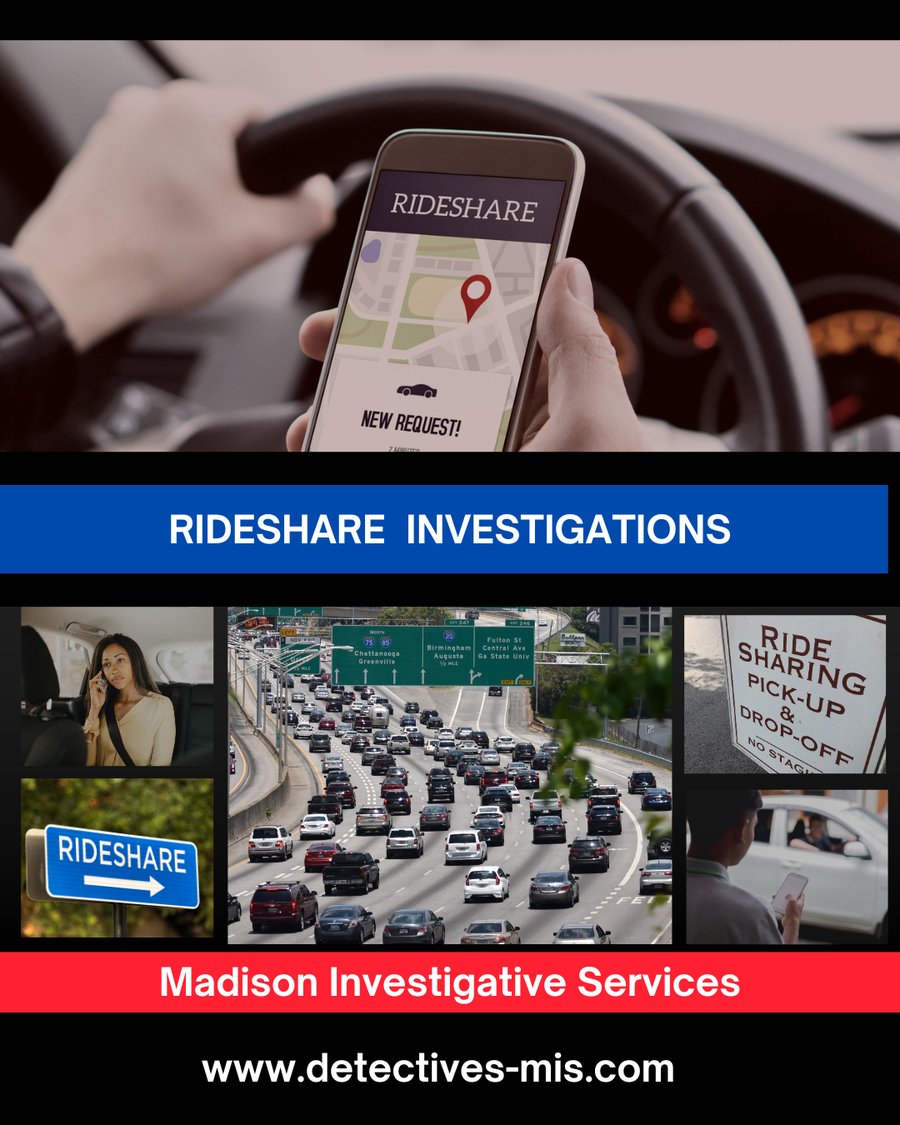
Rideshare services like Uber and Lyft have become part of everyday life, but when something goes wrong — an accident, an assault, a suspicious pattern of behavior — getting real answers about the driver involved can be surprisingly difficult. Rideshare companies closely guard driver data, and the truth is often scattered across court records, public databases, social media, and the accounts of witnesses and passengers. Here’s how private investigators approach a rideshare driver investigation from every angle.
Subpoena or Court Orders
Rideshare companies rarely release driver information voluntarily, which means a subpoena or court order is often the most direct path to the data an investigation needs, including:
- Driver name, license, and vehicle registration information
- Trip logs, timestamps, and GPS routes
- Rider and driver communications through the app
- Prior complaints or safety incidents on file with the company
Public and Private Databases
Public records — motor vehicle records, court filings, criminal history, and civil litigation — along with private investigative databases can establish a driver’s identity, background, and history of prior incidents that may be relevant to the case at hand.
Social Media and Open-Source Intelligence (OSINT)
A driver’s public social media presence can corroborate a timeline, reveal a pattern of behavior, or surface connections relevant to the investigation — all gathered through lawful, open-source research.
Witness Interviews
Passengers, other drivers, and bystanders who witnessed the incident in question are interviewed to build a complete and corroborated account of what occurred.
Surveillance
In some cases, lawful surveillance can document a driver’s routine, routes, and conduct — helpful when a pattern of behavior, rather than a single incident, is at issue.
Ride as a Passenger (Mystery Rider)
An investigator may book a ride as an ordinary passenger to observe a driver’s conduct, vehicle condition, and adherence to safety practices firsthand.
Crash and Accident Reports
Police-generated crash reports provide an official account of an accident, including diagrams, citations issued, and statements taken at the scene — often a critical piece of the investigative record.

Rideshare Company Driver Data
When obtained through proper legal channels, a rideshare company’s own internal driver records — ratings, complaint history, and background check results — can be highly relevant to establishing a pattern of conduct.
GPS and Traffic Camera Data
GPS trip data and traffic or municipal camera footage can confirm a vehicle’s location, speed, and route at the time in question, corroborating or contradicting other accounts of the incident.
Accident and Traffic Violations
A driver’s prior accident history and traffic violations, where legally accessible, help establish whether an incident reflects an isolated event or part of a broader pattern.
Ethical and Legal Considerations
Every investigative method used must comply with applicable state and federal law, including data privacy statutes and rules governing surveillance and the use of subpoenaed information. A properly conducted rideshare investigation is thorough without ever crossing legal or ethical lines.
In Summary
Investigating a rideshare driver requires pulling together data, records, and firsthand accounts from a wide range of sources — legal, technical, and human. If you need an investigation involving the driver of a rideshare service, contact Madison Investigative Services.

Don DiStefano is founder of Madison Investigative Services and a retired Detective-Sergeant with the Vallejo Police Department in California. He currently serves as Captain and Director of Investigations at Quinnipiac University and as President of the Connecticut Private Investigators Association. Read Don’s full bio →
Discussion